Affinity Design
Service Design for Educational Organizations
CASE STUDY · U.S. POSTAL SERVICE
A 1,500-page rulebook, rebuilt for the people who use it.
Your family handbook doesn't run to 1,500 pages. But if parents email the office for answers it already holds, it has the same problem.
1,500
Pages restructured
Cited Model
Studied in design literature
alongside IRS & ATO reforms
6
Awards, including STC International
Award of Excellence
Nationwide
Adopted across USPS; staff
directed to cite it with customers
The Situation
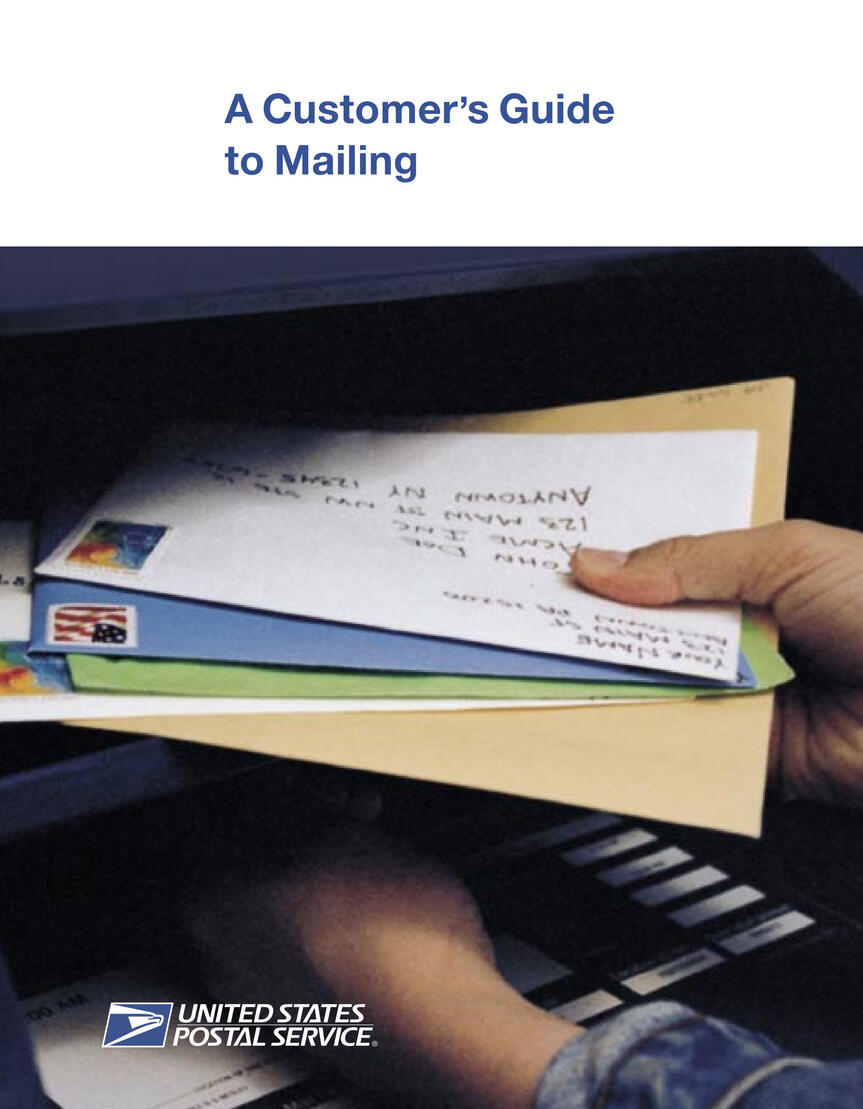
The Domestic Mail Manual held every rule for sending mail in the United States. It was written to be complete, not to be used. Business mailers and postal staff couldn't find what they needed, so they called or went to a post office for answers the manual already held.
My Role
I was one of 15 graduate designers on a Carnegie Mellon School of Design project, working with three faculty. I did field research with local businesses and mailers, typographic testing and layout, and prototyping, and I worked on how readers find their way through the manual and each page.
What we found
People think in terms of the job in front of them, sending a mailing, not the rules behind it. The manual was organized against them.

What we did
Rebuilt the manual around the steps of mailing, not the regulations.
Rewrote it in plain language, with diagrams and one consistent visual system.
Tested versions with real users and refined them.
What changed
Adopted across the Postal Service, with staff directed to use it with customers
Six awards, including an STC International Award of Excellence
Cited in design writing alongside reforms at the IRS and the Australian Tax Office
What sets Jennifer apart is her ability to hold complexity without losing sight of the user, navigating large, multi-layered projects with rigor and ease while bringing strategic thinking to every decision. She is a deeply collaborative partner who listens carefully, asks the right questions, and translates the needs of diverse perspectives into brilliant design solutions."-Nassim Parvin, Professor, University of Washington
What this means for your school
Most schools run on documents families struggle to use: the handbook, the enrollment packet, the re-enrollment contract. When families can't find an answer, they ask the office, or quietly decide the school is hard to deal with. If your documents are part of why families leave, they'll show up when I map a family's year.
Role & attribution: A Carnegie Mellon University School of Design project (DMM Transformation Project, directed by Prof. Richard Buchanan) carried out by a team of 15 graduate students and three faculty. Jennifer Anderson contributed as an individual graduate designer on the research and synthesis; the DMM was published by the USPS. Company and agency names are referenced to describe this experience, not to imply a client relationship with Affinity Design.